
Job Overview
Location: Burlington, Ontario
Structure: Two-story semi-detached home
Problem: Skunk denning under front deck
Service: Humane skunk removal and exclusion
Visits: 2
Summary
We responded to a report of animal activity beneath the front deck of a semi-detached home in Burlington. Following inspection, a skunk was confirmed to be denning under the structure. Our team completed a full perimeter trenching and galvanized steel mesh exclusion with a properly installed one-way door. After confirmation that the skunk had vacated, the one-way door was removed and the exclusion system was secured.
Background / Property Context
The property is a two-story semi-detached home with a raised wooden front deck constructed over soil. The deck skirting consisted of vertical wooden boards with visible ground-level gaps along the base. Soil conditions were dry at the time of service, and weather did not impact installation.
Deck structures of this type commonly provide sheltered space beneath them, particularly when the perimeter is not buried or reinforced below grade.
Customer Concern
The homeowner reported wildlife activity under the front deck, including movement and signs of digging along the perimeter. They were concerned about the animal remaining on site and potential odour issues.
Inspection & Findings
Technician Shaohua completed a full inspection of the accessible deck perimeter.
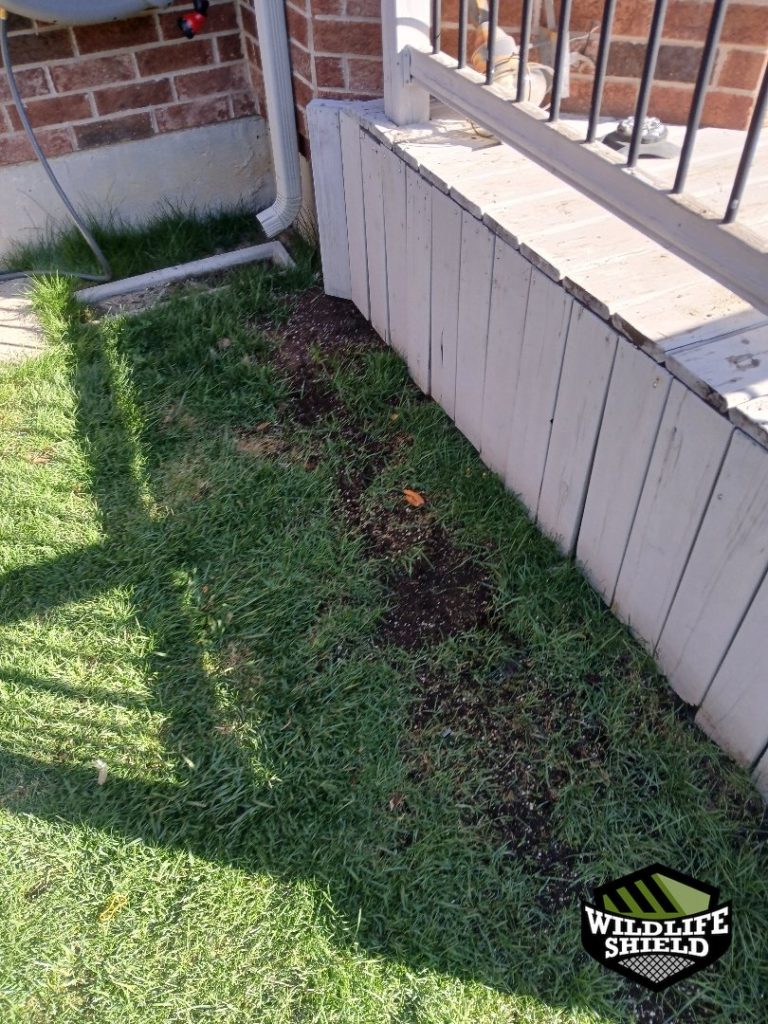
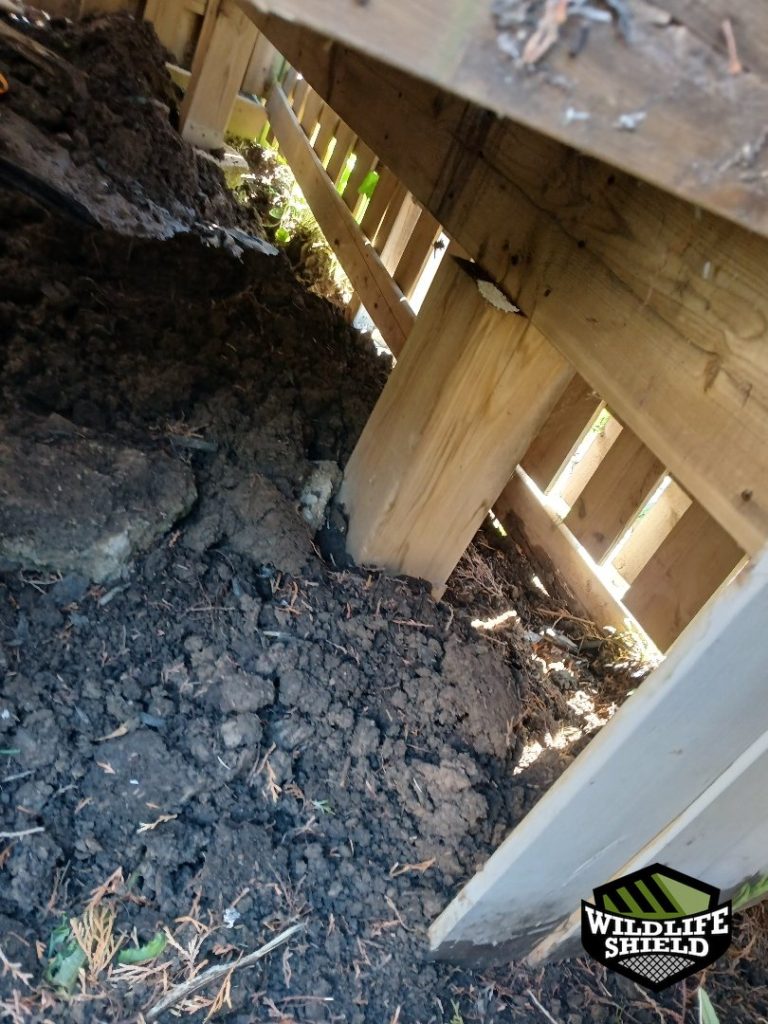
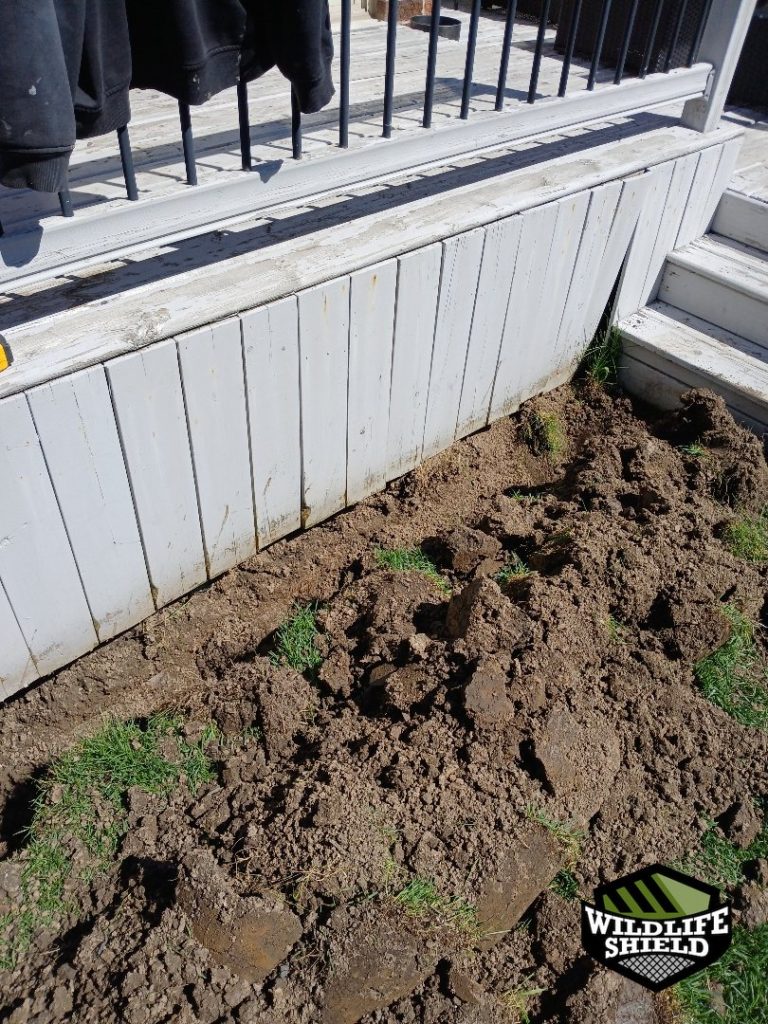
Active digging was observed along the base of the deck skirting. Soil displacement and a defined burrow entrance were present at one section of the deck. The ground adjacent to the structure showed fresh excavation consistent with skunk denning behaviour.
Photos taken at the time show:
-
Exposed soil and a clear trench line forming along the deck perimeter
-
A visible burrow opening beneath the wooden skirting
-
Open gaps at grade level where wildlife could access beneath the deck
-
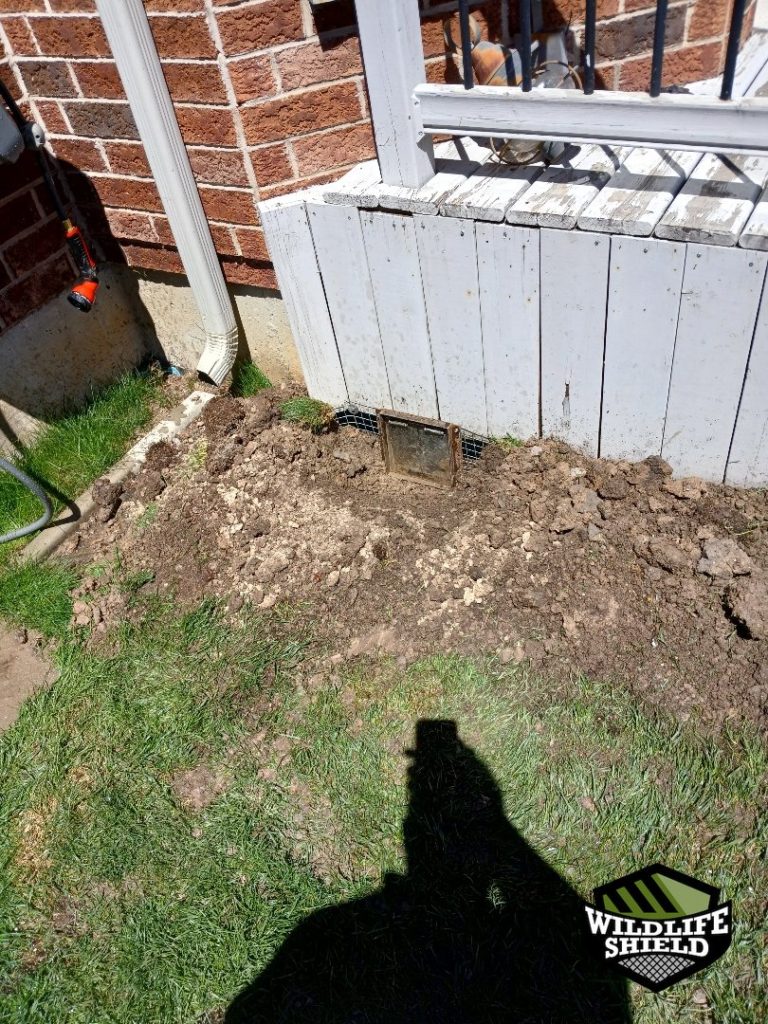
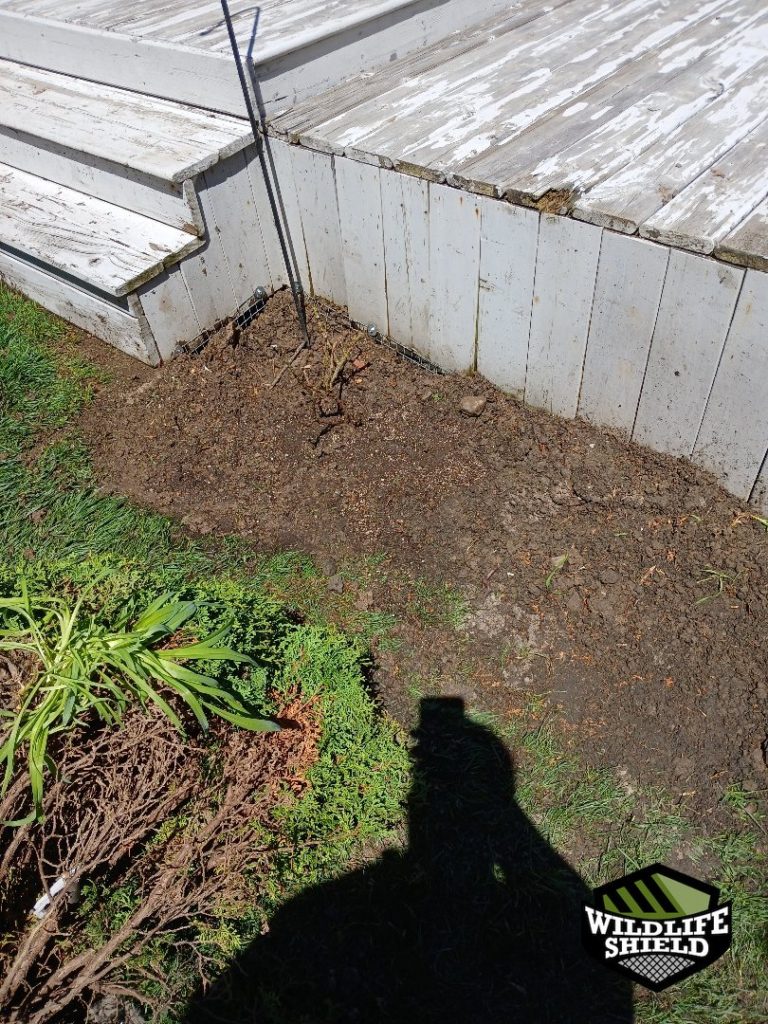
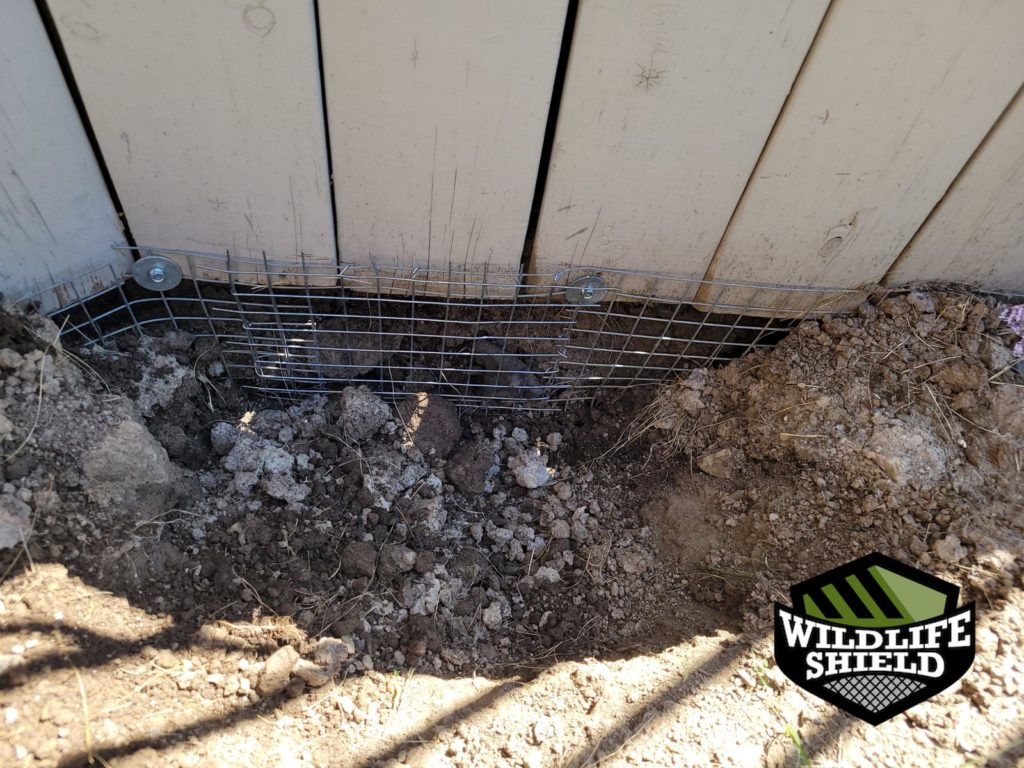
Installation of galvanized steel mesh secured to the lower deck framing
-
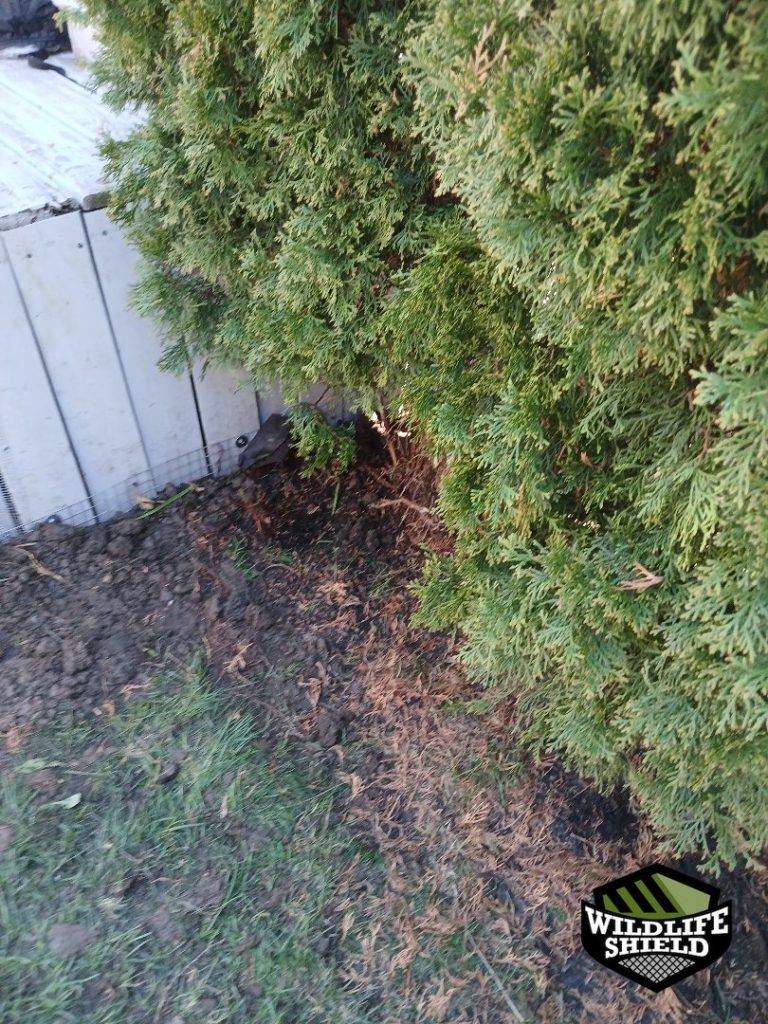
A one-way door positioned at the primary entry point
-
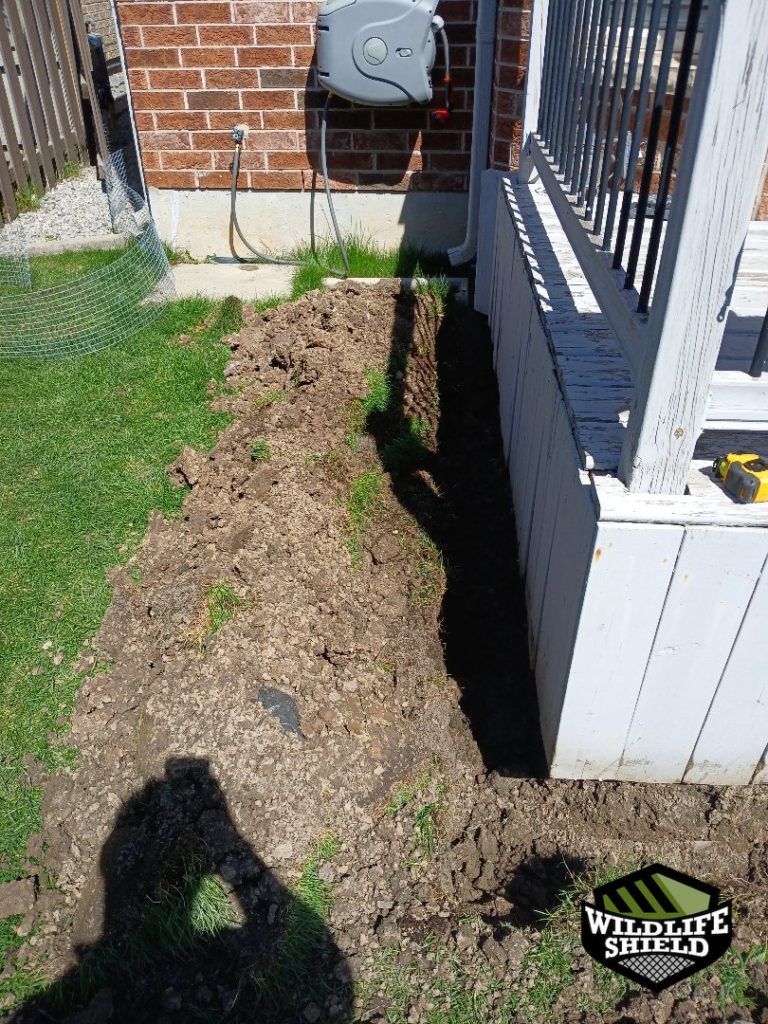
Final backfilling and soil restoration after mesh installation
No secondary entry points were identified beyond the main burrow location.
Cause Analysis
Skunks commonly select deck structures for denning due to the sheltered, shaded environment and protection from predators. In this case, the deck skirting was not buried below grade, leaving accessible gaps at soil level. Loose soil conditions also made excavation easier. These combined factors allowed the skunk to establish a den beneath the structure.
Treatment / Removal
A humane removal plan was implemented.
We excavated approximately 37 linear feet around the accessible perimeter of the deck. A trench was dug to approximately one foot below grade and six inches outward from the structure.
Galvanized steel mesh was mechanically secured to the base of the deck and extended into the trench to create a below-grade barrier. The mesh was then backfilled and compacted to prevent future digging.
A properly fitted one-way door was installed at the active burrow entrance. This device allowed the skunk to exit naturally while preventing re-entry. No trapping or lethal methods were used.
Exclusion & Repairs
Once the skunk vacated, the one-way door was removed. The final entry point was permanently sealed with galvanized mesh and backfilled to match the surrounding grade.
The completed installation created a continuous below-grade barrier along the deck perimeter, preventing future burrowing access.
Outcome & Confirmation
At the second visit, the homeowner reported no further activity beneath the deck.
Our team confirmed:
-
The one-way door was removed
-
Mesh exclusion remained secure
-
No new digging or burrow activity was present
The deck perimeter was fully protected at the time of completion.
Technician Notes
Shaohua confirmed active skunk denning during the initial inspection. Soil displacement patterns and burrow size were consistent with skunk behaviour.
A total of 37 feet of trenching was completed using galvanized steel mesh installed one foot down and six inches outward. Installation conditions were favourable, and full perimeter access was available.
At follow-up, no further wildlife activity was observed.
This work was completed by our Burlington Wildlife control team. For Wildlife control inquiries in Burlington, contact 647-496-5721.