
Job Overview
Location: Burlington, Ontario
Structure: Two-story detached house with raised foundation
Problem: Morning attic noise consistent with wildlife activity
Service: Raccoon removal
Visits: 2
Summary
We were contacted regarding attic activity reported in the morning hours. An inspection confirmed wildlife access at a roof–soffit intersection. Although the initial sounds suggested squirrel activity, findings showed a raccoon-created entry that had been reused. Humane exclusion and permanent screening were completed over two visits with no further activity reported.
Background / Property Context
The property is a two-story detached home situated close to neighboring houses on both sides. Rooflines and soffit intersections created narrow access points along the upper structure. Work was completed between October and December with no significant weather limitations.
Customer Concern
The homeowner reported recurring attic noises in the morning and was concerned about wildlife entering the attic space.
Inspection & Findings
During the attic and roof inspection, our team identified a primary opening at the roof–soffit intersection. The opening size and wear patterns were consistent with raccoon access. Evidence also suggested secondary use by a smaller animal entering through the same point.
Cause Analysis
Raccoons commonly target roof–soffit intersections due to leverage points and material gaps. Once an opening is established, smaller wildlife may reuse the same access. Close spacing between neighboring homes can increase roofline traffic and repeated investigation by animals.
Treatment / Removal
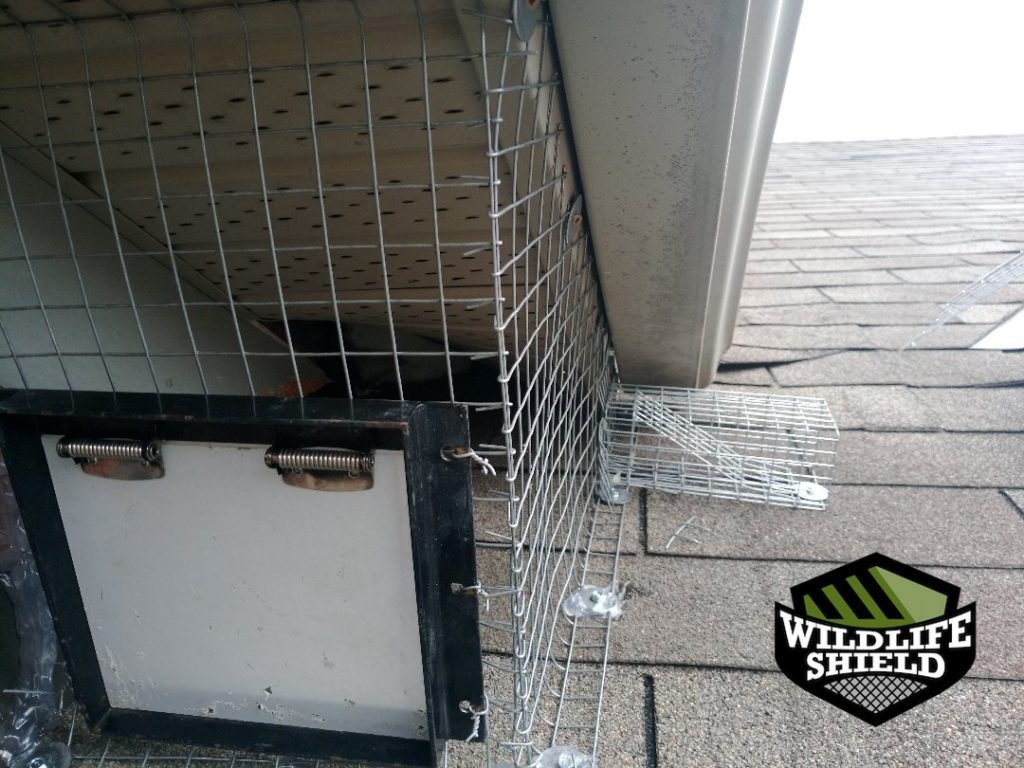
On the first visit, two one-way doors were installed over the identified opening using galvanized steel mesh. This allowed any animals inside to exit while preventing re-entry. The approach was non-lethal and designed to address both the primary and secondary wildlife use of the space.
Exclusion & Repairs
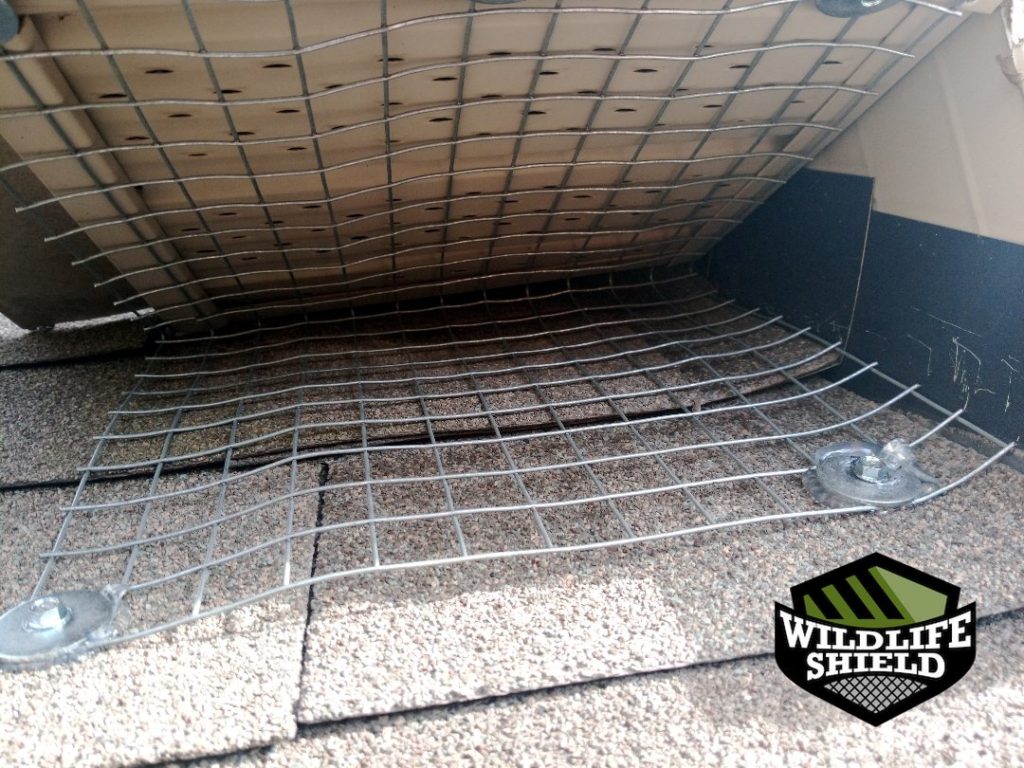
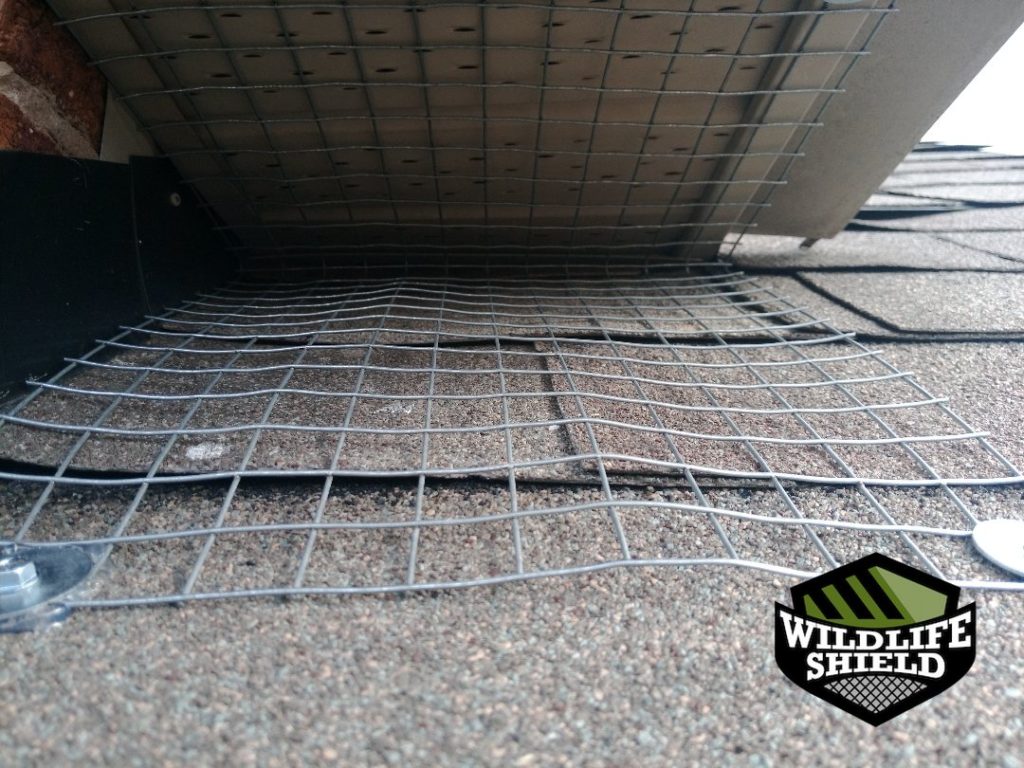
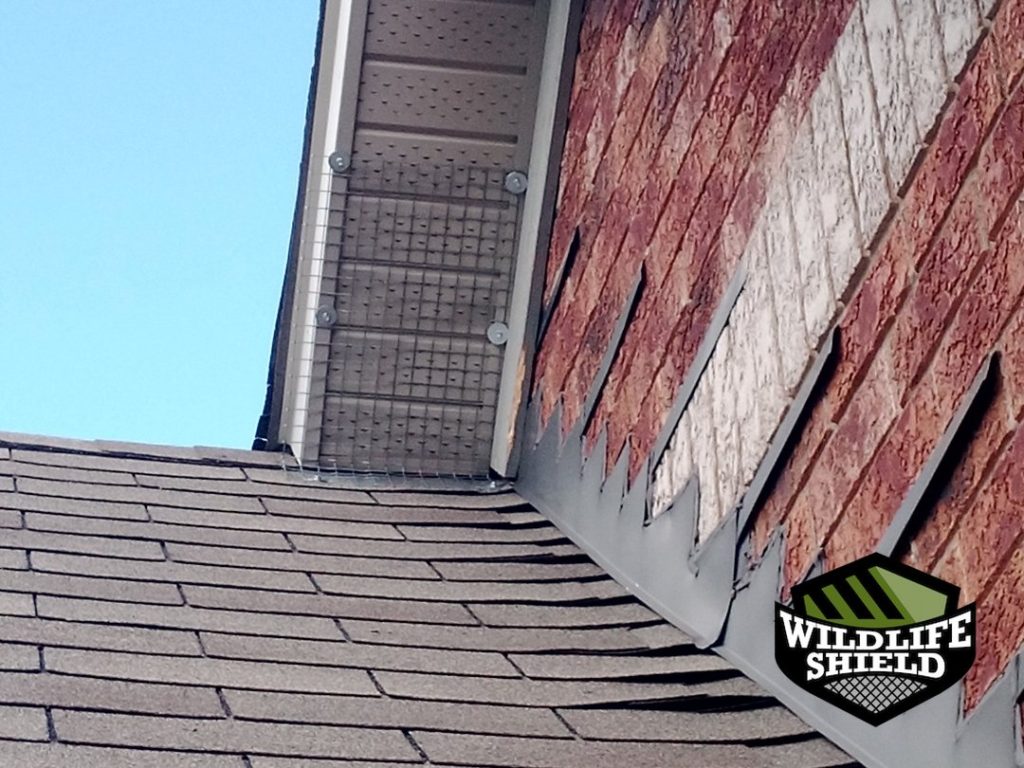
On the follow-up visit, after confirming no further activity, the one-way doors were removed. The roof–soffit intersection was permanently sealed with galvanized steel mesh, secured flush to the structure to prevent future access.
Outcome & Confirmation
Following the second visit, no additional attic activity was reported. The exclusion work was inspected and confirmed secure. The attic entry point was fully closed, and the site showed no signs of ongoing wildlife presence.
Technician Notes
Andrew completed both visits, including roof inspection, installation of dual one-way doors, and final exclusion. Photos show galvanized mesh screening installed at the soffit area and along the roofline, with hardware fastened to conform to the roof surface.
This work was completed by our Burlington Wildlife control team. For Wildlife control inquiries in Burlington, contact 647-496-5721.